

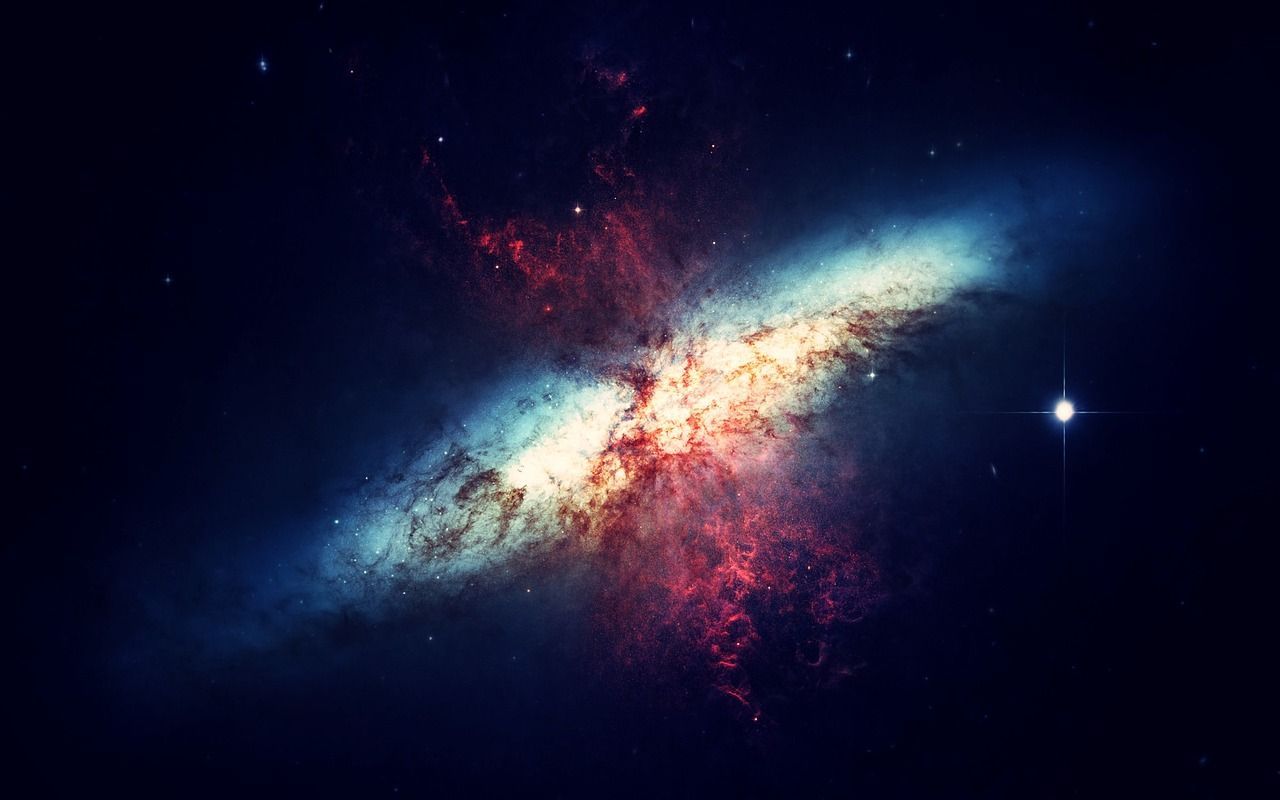
Existence of other worlds
Imam Jaʿfar al‑Ṣādiq’s (AS) statement about “other worlds with different sciences” becomes far more illuminating when unpacked carefully. It touches on cosmology, epistemology, and the limits of human perception—all themes he often wove together when teaching about the unseen (al‑ghayb) and the vastness of creation.
When the Imam says there are “other worlds,” he is not speaking metaphorically. In the classical Shia intellectual tradition, ʿālam (world - عالم) refers to any realm of existence created by Allah (SWT)—physical or non‑physical, visible or invisible. These include:
- Physical worlds beyond human reach
- Spiritual realms such as ʿālam al‑malakūt (عالم ملکوت) and ʿālam al‑jabarūt (عالم جبروت)
- Cosmic domains with their own laws, inhabitants, and forms of knowledge
- The Holy Qur’an itself speaks of Allah as “Rabb al‑ʿālamīn”—Lord of the worlds, plural—implying multiplicity and diversity of creation.
Two categories of knowledge in those worlds
The Imam’s distinction between two types of knowledge is profound:
1. Knowledge similar to ours
This refers to sciences that follow patterns we can conceptually understand. These sciences may differ in detail, but they share a recognizable framework. They are “parallel” to our sciences, even if more advanced.
- Cause and effect
- Observation and inference
- Structure, order, and natural laws
- Mathematics, physics, and logic
2. Knowledge beyond human comprehension
This is the more striking category. The Imam is describing forms of knowledge that:
- Do not operate by the laws of our universe
- Cannot be understood through our sensory experience
- Cannot be reached by our methods of reasoning
- Belong to realms with different ontologies, different rules of existence
In modern terms, this is like saying:
There are domains of reality where the very structure of knowledge is unlike anything the human mind can grasp. This aligns with:
- Qur’anic descriptions of the unseen
- Philosophical discussions of higher realms
- The idea that human cognition is limited by the constraints of this world
- The Imam’s broader teachings that divine knowledge encompasses realities inaccessible to created beings
Why this teaching matters
The Imam is not merely describing exotic worlds; he is teaching a principle:
- Human knowledge is bounded by the structure of our universe.
- Divine creation is not.
This has several implications:
- Our sciences, no matter how advanced, cannot exhaust the realities Allah has created.
- The unseen is not simply hidden—it operates by different rules.
- The Imams, through ʿilm ladunnī, have access to knowledge that transcends the limits of this world.
- What we call “impossible” is often only impossible within the constraints of our own realm.
This perspective also harmonizes with modern cosmology, which proposes:
- Multiverses
- Higher dimensions
- Realms governed by different physical constants
- Forms of existence beyond human sensory detection
These scientific ideas echo the Imam’s core message:
Creation is vast, layered, and filled with forms of knowledge far beyond human reach.