

Science - Honey Bee
Bees live in colonies. Generally, a colony contains one queen bee, a female; up to a few thousand male bees; and tens of thousands of female worker bees. The tasks of following specific "dance" patterns to find food, collecting nectar, making honey and building the hive and cleaning it are all attributed to the female bees. The "dance" is generally used to communicate information about the resources.
Additionally, honey, propolis, and venom have been used for thousands of years and have well known medicinal properties. The active component of honeybee venom is melittin. Both honeybee venom and melittin have demonstrated antitumoral effects in melanoma, non-small-cell lung cancer, glioblastoma, leukemia, ovarian, cervical, and pancreatic cancers, with higher cytotoxic potency in cancer cells compared to non-transformed cells. In a recent study, bee venom destroyed 100% of aggressive breast cancer cells in under 60 minutes! Honey, propolis, and venom are only produced by female bees.
Hexagonal hive design optimizes honeycomb construction by providing maximum storage capacity using minimal wax, ensuring structural strength through efficient tiling. The 120-degree angles of hexagons allow them to fit together without gaps, reducing material waste while providing stability for storing honey, pollen, and brood.
Key Aspects of Hexagonal Design
Optimal Efficiency: Hexagons are the most efficient shape for dividing a surface into regions of equal area with the least perimeter, saving precious wax resources, as bees consume 6-8 lbs of honey to produce 1 lb of wax.
Natural Formation: While bees often start building in circles, the soft wax, warmed by the bees, pulls into a hexagon shape at the intersection of three cell walls due to surface tension.
Maximum Strength: The 120-degree angles create a robust, lightweight structure.
Structural Advantages: The hexagonal pattern eliminates empty gaps between cells, ensuring maximum storage capacity.
Bees are remarkable navigators and utilize a combination of amazing methods to find their way around their environment, including finding food sources and returning to their hive.
- Sun Compass - Bees use the sun as a primary compass for orientation, even on cloudy days.
- Polarized Light - When the sun is obscured, they can perceive the patterns of polarized light in the sky, which helps them deduce the sun's position and stay on course.
- Visual Landmarks - Bees use a combination of visual cues, including patterns, color, and shape to identify and differentiate between flowers. Possessing trichromatic color vision, allows them to see blue, green, and ultraviolet (UV) light, which helps them see patterns on flowers, particularly nectar guides, that are invisible to the human eye. Bees actively scan patterns, focusing on specific regions and individual features, as they approach and hover near them. This dynamic scanning behavior allows them to extract crucial information and make accurate decisions about which flowers to visit or avoid. They utilize spatial patterns for navigation, remembering landmarks, and even solving complex tasks like navigating mazes by recognizing rules governing sequential turns.
- Navigation Memory - They possess a "navigation memory" which is akin to a mental map of their familiar territory, guiding them during exploration and helping them find their way back home.
- Sense of Smell (Pheromones) - Bees utilize their sense of smell to identify familiar scents associated with their hive and food sources, particularly at closer distances.
- Waggle Dance - Forager bees perform a waggle dance to communicate the distance and direction of a food source to other bees within the hive. The orientation and duration of the dance convey this crucial information, allowing recruits to locate the food efficiently.
- Earth's Magnetic Field - Honey bees possess a specialized system, called magnetoreception, that allows them to sense the Earth's magnetic field. The primary mechanism behind this ability is believed to be the presence of magnetite in the honey bee's abdomen. These iron granules act as tiny magnetic sensors.
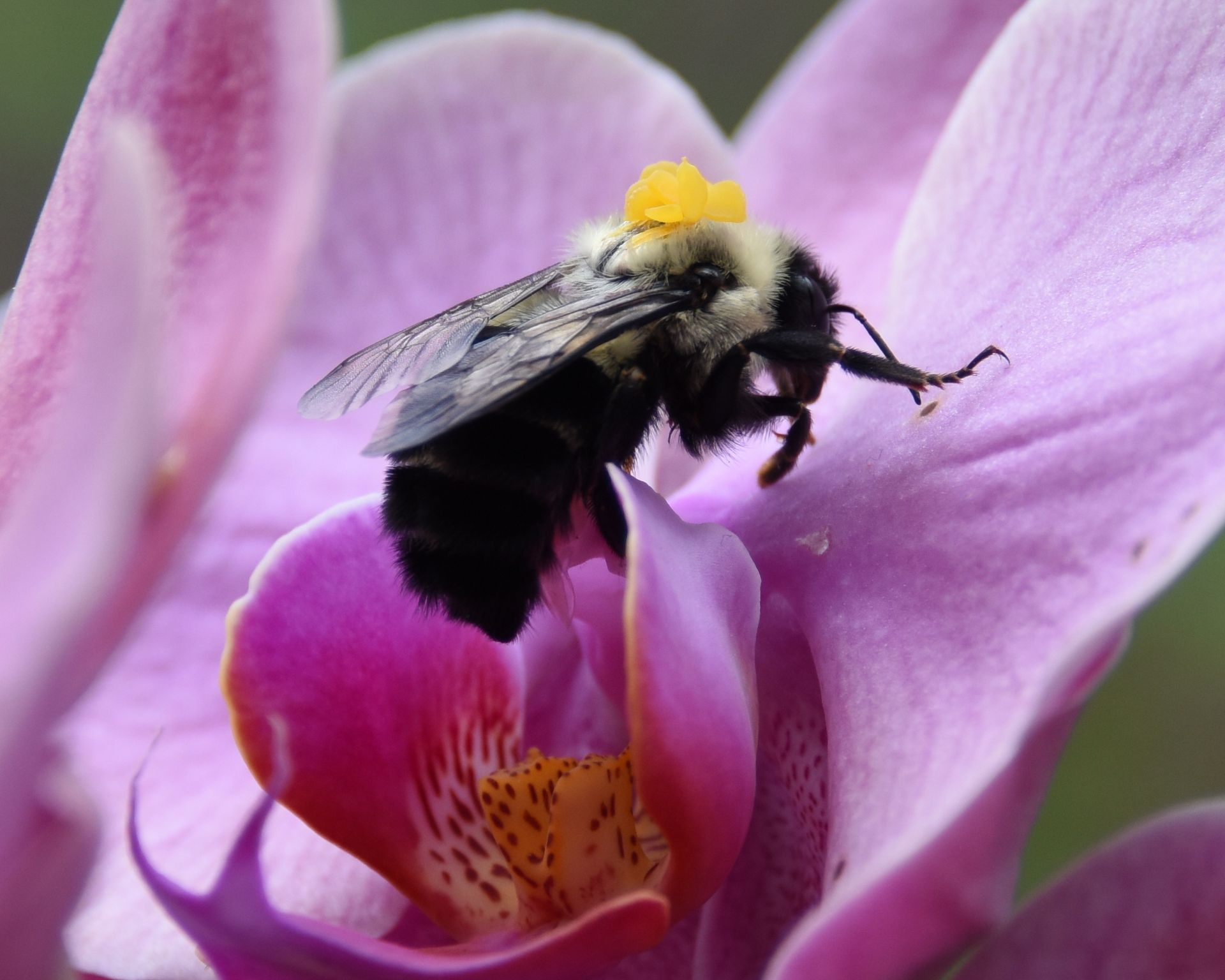
Qur'an - Honey Bee
In the Arabic language, words and verbs have feminine/masculine forms. In the following verses, all references to the bee and the specific tasks that are performed are in the "female" form of the words! In other words, The Holy Qur'an is informing us that all the described tasks are performed by the female bees. That is a scientific fact. It describes: building of the cells (hives), eating the nectar, the "dance" to find the ways to the flowers, and producing honey according to what Allah has taught them. Interestingly, it tells us that honey has healing power!
The verse uncovers the fact that Allah (SWT) has bestowed upon the bee the wisdom to construct its hive. Remarkably, the bees skillfully construct their hives with astonishing precision. They work in four distinct groups, commencing from the corners, and adeptly create hexagons that gradually converge towards the center. In an extraordinary engineering accomplishment, they all reach the center simultaneously, resulting in flawlessly crafted hexagonal structures. This intricate endeavor showcases an awe-inspiring demonstration of intricate engineering, demanding meticulous design, precise calculations, efficient management, seamless coordination, and effective communication.
وَأَوْحَىٰ رَبُّكَ إِلَى ٱلنَّحْلِ أَنِ ٱتَّخِذِى مِنَ ٱلْجِبَالِ بُيُوتًا وَمِنَ ٱلشَّجَرِ وَمِمَّا يَعْرِشُونَ
And your Lord taught the bee to build its cells in hills, on trees, and in (men's) habitations; 16:68
ثُمَّ كُلِى مِن كُلِّ ٱلثَّمَرَٰتِ فَٱسْلُكِى سُبُلَ رَبِّكِ ذُلُلًا يَخْرُجُ مِنۢ بُطُونِهَا شَرَابٌ مُّخْتَلِفٌ
أَلْوَٰنُهُۥ فِيهِ شِفَآءٌ لِّلنَّاسِ إِنَّ فِى ذَٰلِكَ لَـَٔايَةً لِّقَوْمٍ يَتَفَكَّرُونَ
Then to eat of all the produce (of the earth), and follow the ways of your Lord laid down [for you]: there issues from
within their bellies a drink of varying colors, wherein is healing for men: verily in this is a Sign for those who give thought. 16:69
Navigation ways and methods - The above verse mentions "follow the ways of your Lord laid down [for you]". We saw above in the Science section that bees use many ways/methods for navigating! Here, the importance of all those methods/ways are brought to our attention so perhaps we see the Signs of Allah (SWT). How could the bee with a brain the size of a grain of rice possess such abilities?!
Bellies - The honey bee has two bellies. One is used for food and drinks. The other used for the honey is called the "honey stomach" which acts as a reservoir for nectar before it is processed into honey. The above verse mentions "bellies" in plural form, hinting that there are 2 bellies.
"within their bellies a drink of varying colors, wherein is healing for men" - Female bees produce honey, propolis, and venom with health benefits for humans. They are of "varying colors". Finally, honey, propolis, and venom are only produced by female bees as stated in the verse by choosing the feminine word for "Bee".
Magic Number 16
- The Arabic word for honey bee " ٱلنَّحْلِ " is mentioned only once in the Holy Qur'an - Sura 16.
- Verse 16:68 containing this word is listed above and is comprised of total of 16 words.
- Additionally, the total number of letters from the beginning of verse to end of the word for bee (ٱلنَّحْلِ ) is 16.
- Most interestingly, the male honey bees have 16 chromosomes!
The 6th Holy Shia Imam (Imam Jafar Sadigh A.S.) described the hexagonal hive structure!
"Just consider the bee and the concerted efforts to produce honey and the hexagonal hive, and the subtleties of instinct that subsists therein. You will find it extremely wonderful and subtle, when you consider its workings. You will find their manufacture to be magnificent and of fine use for men. And when you look at the artisan, you will find it devoid of intelligence, incapable of knowing itself, what to say of others. There is thus clear argument in this that the exactitude in skill, and ingenuity is not due to the bee but due to the omnipotence of Him, Who has created it on such pattern and appointed it to the service of men."
في توحيد المفضل قال مولانا الصادق (عليه السلام): انظر إلى النحل واحتشاده في صنعة العسل، وتهيئة البيوت المسدسة، وما ترى في ذلك اجتماعه من دقائق الفطنة. فإنك إذا تأملت العمل رأيته عجيبا لطيفا، وإذا رأيت المعمول وجدته عظيما شريفا موقعه من الناس، وإذا رجعت إلى الفاعل ألفيته غبيا جاهلا بنفسه فضلا عما سوى ذلك، ففي هذا أوضح الدلالة على أن الصواب والحكمة في هذه الصنعة ليست للنحل بل هي للذي طبعه عليها وسخره فيها لمصلحة الناس
The first video below is in Persian while the 2nd one is in English.
Video courtesy of WindowsofIslam.com
This website frequently incorporates material, pictures, and videos sourced from space explorations, nature, arts, architecture, and scientific achievements. These elements serve as a compelling testament to the intricate and captivating nature of creation. While utilizing selected visuals and videos from external sources under the Fair Use Act, we always strive to acknowledge the origins of these materials. However, it is important to note that their inclusion should not be interpreted as an endorsement of any particular organizations.