

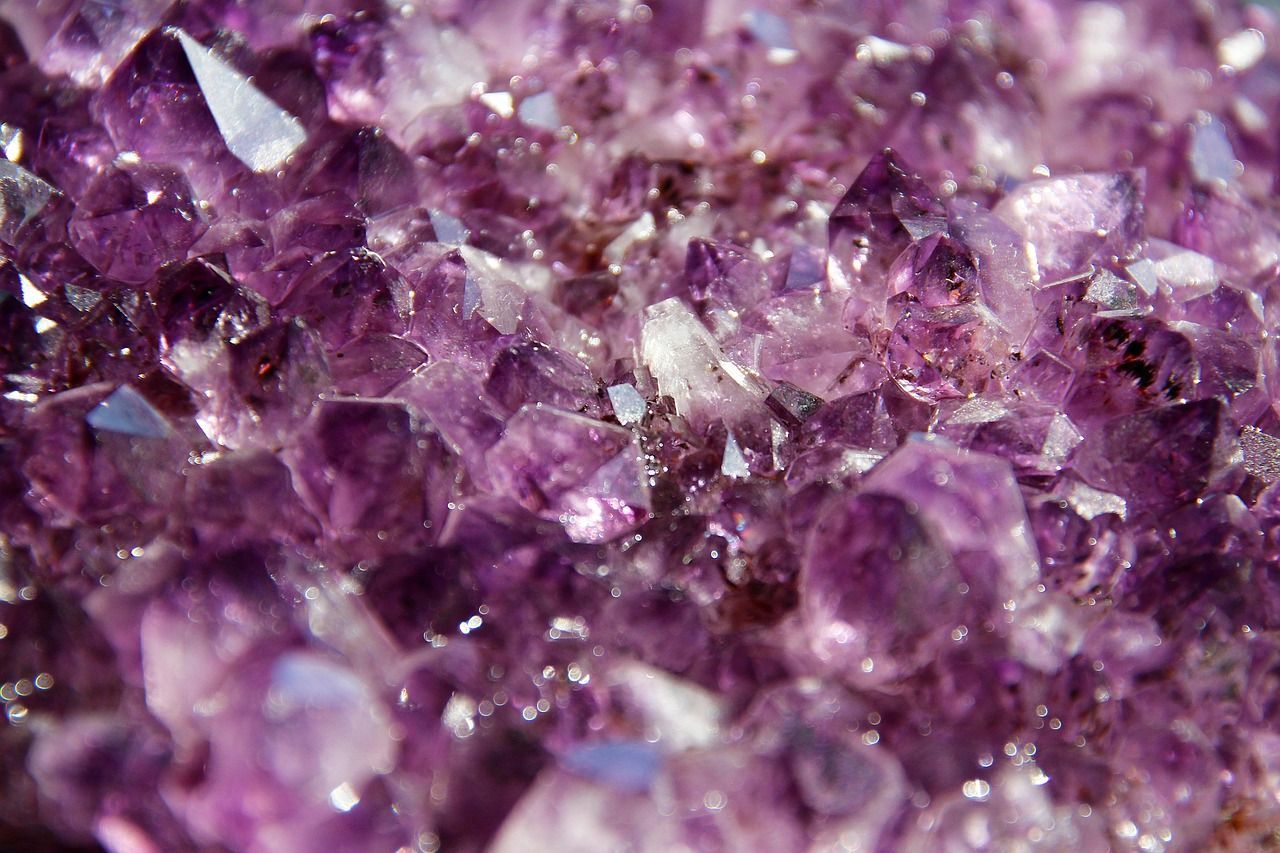
Liquid state of stone
Imam Jaʿfar al‑Ṣādiq’s (AS) explanation to Abū Shākir about the origin of stone, its molten past, and the immense heat required to liquefy it becomes far more powerful when expressed with clarity and then placed against what modern geology now confirms.
The Imam said:
“Abū Shākir, if you truly understood the stone from which you carve your idols, you would not deny the existence of Allah or claim that I have imagined Him. You do not know what a stone is, nor how it came into being. Today you can cut it and shape it as you wish, but there was a time when it was in a liquid state. Gradually it cooled, and Allah solidified it. In the beginning it was so brittle that it would have shattered in your hand like glass. You cannot melt stone in your fireplace, nor can you liquefy iron at home. Only extremely high temperatures can turn solid stone back into liquid.”
This exchange shows the Imam describing the igneous origin of rock, the cooling of molten material, and the thermal properties of minerals—concepts that would not be scientifically articulated until more than a thousand years later.
Modern geology confirms several points that align with the Imam’s explanation:
- Earth’s early state was molten — During the Hadean eon, Earth was essentially a sphere of magma, constantly reshaped by volcanic activity.
- Rocks form from cooled molten material — Igneous rocks (basalt, granite, etc.) originate exactly as the Imam described: molten, then cooled and solidified.
- Freshly cooled lava is brittle — Newly solidified lava often fractures and crackles, matching the Imam’s analogy of early stone being “like glass.”
- Extremely high temperatures are required to melt rock — Most rocks melt between 700°C and 1,200°C, far beyond anything achievable in a simple fire.
These principles were unknown in 8th‑century Arabia. They were not part of Greek, Indian, or Persian scientific traditions either. Yet the Imam articulated them with precision.
Connection to Qur’anic imagery: ṣalṣāl ka‑l‑fakhkhār
The Qur’anic phrase صَلْصَالٍ كَالْفَخَّارِ (“sounding clay like pottery”) in 55:14 is traditionally understood as describing the symbolic material from which Adam was created. Classical tafsīr explains ṣalṣāl as dried clay that produces a ringing sound when struck, and fakhkhār as clay baked like pottery.
This description also mirrors the geological behavior of early Earth’s crust:
- As molten rock cooled, it hardened into brittle crust.
- The fractured, dried lava fields produced crackling and ringing sounds when stepped on—much like pottery.
- The Qur’anic imagery of “sounding clay” aligns with the physical properties of newly solidified volcanic rock.
- This parallel suggests a deeper symbolic resonance: the Holy Qur’an may be drawing attention to the shared material origin of humanity and the Earth itself—both shaped from substances that once passed through stages of heat, fluidity, and solidification.
Could the Qur’anic description of human creation symbolically echo the planet’s own formation?
Several layers support this idea:
- Both human creation and Earth’s formation involve transformation of elemental material.
- Both pass through stages of fluidity, shaping, and solidification.
- Both are described using imagery of clay, heat, and brittleness.
The Imam’s explanation to Abū Shākir bridges cosmic processes and human creation, suggesting a unity in the way Allah brings things into existence. While classical tafsīr focuses on Adam’s material origin, the geological parallel does not contradict it; rather, it enriches the symbolic depth of the verse.
Why does the Imam’s knowledge stand out?
When viewed together with his other teachings—microorganisms, blood circulation, atomic motion, tectonic movement—the Imam’s explanation of molten rock fits into a consistent pattern:
- He describes scientific realities centuries before humanity discovers them.
- His explanations are precise, not metaphorical.
- They align with modern scientific understanding in fields as diverse as geology, physics, biology, and cosmology.
Within the Shia understanding, this is attributed to ʿilm ladunnī—knowledge granted directly by Allah (SWT) to His chosen Representatives.