

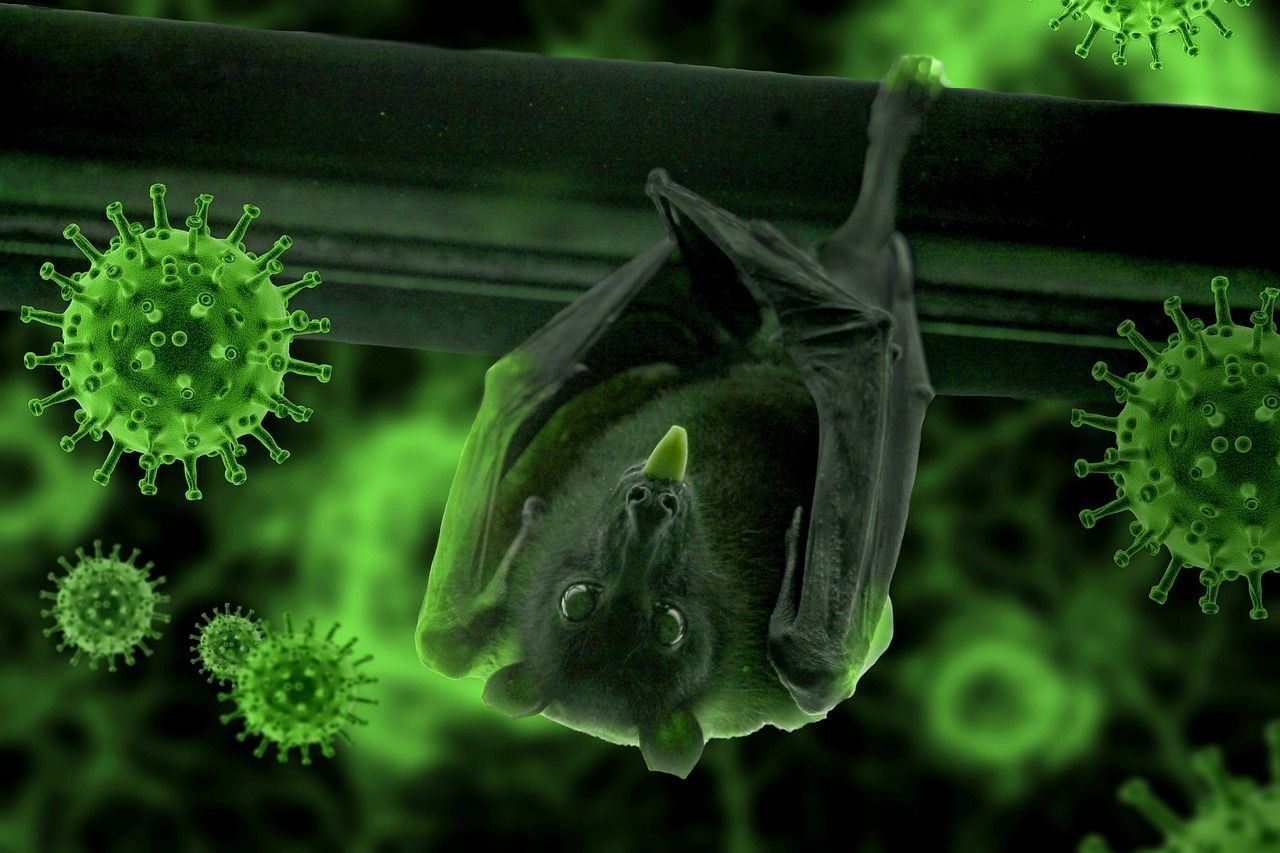
Microorganisms in the Human Body
Imam Jaʿfar al‑Ṣādiq’s (AS) statement to Abū Shākir (an idol worshipper) about unseen living creatures inside the human body becomes far more striking when viewed through the lens of history, science, and the intellectual environment of his time. More than a thousand years before the invention of the microscope, he described—accurately and in detail—the existence, behavior, and essential biological role of what we now call microorganisms.
The Imam said:
- There are tiny living beings inside the human body.
- They are too small to be seen with the senses.
- They are numerous, comparable to grains of sand in a desert.
- They live, multiply, work, and die within us.
- Human life depends on their activity.
- A person limited to sensory perception alone will not know they exist.
Every one of these points aligns with what modern biology now confirms about bacteria, microbiota, and cellular microorganisms.
Why is this extraordinary in a 7th–8th century context?
No scientific tools existed in Arabia—or anywhere else in the world—that could detect microorganisms. The first microscope was developed by Antonie van Leeuwenhoek in the late 1600s, nearly 900 years after Imam al‑Ṣādiq (AS). Even then, the scientific community did not fully understand the role of microbes in human health until the 19th century, with Pasteur and Koch.
Yet the Imam described:
- Their invisibility
- Their biological functions
- Their life cycle
- Their vast numbers
- Their essential role in sustaining human life
- These are not vague metaphors; they are precise biological claims.
A typical adult human body hosts approximately 30 to 40 trillion bacteria, which is roughly equivalent to the number of human cells in the body (about 30 trillion).
Total Count: Recent estimates place the number of bacteria at 38–39 trillion.
Location: Most of these microbes reside in the large intestine (gut), which houses roughly (3.9 x 10¹³) bacteria.
Ratio: Bacteria are roughly equal human cells or slightly outnumber them by a ratio of about 1.3 to 1.
Mass: While numerous, these microorganisms are much smaller than human cells, meaning they make up only a small fraction of the body's total weight.
Variation: Individual bacterial counts can vary by over 50% between people.
These bacteria, which make up the human microbiome, are essential for digestion, immune system function, and overall health.