

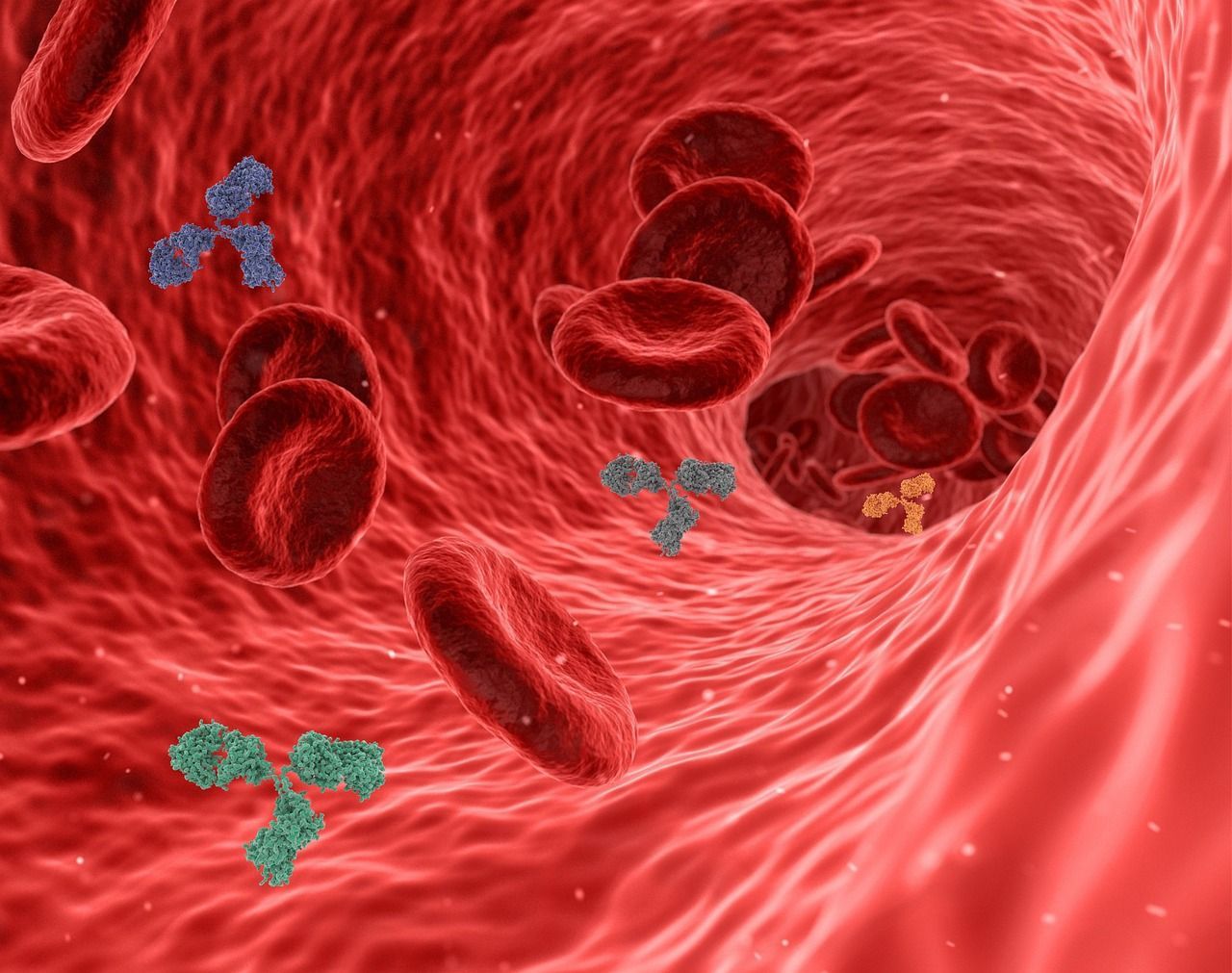
Movement of Blood in the Body
Imam Jaʿfar al‑Ṣādiq’s (AS) statement about the movement of blood becomes far more compelling when expressed with clarity and placed in its scientific and historical context. The Imam asked Abū Shākir, “Do you hear the sound of the movement of blood in your body?”
Abū Shākir replied, “No, I do not. But does blood really move in the body?”
The Imam said, “Yes, it does. It completes a full circuit through your body. If this circulation were to stop for only a few minutes, you would die.”
Abū Shākir objected, “I cannot believe that blood circulates in the body.”
The Imam responded, “It is your ignorance that prevents you from believing that your blood circulates within you—just as the same ignorance prevents you from believing in the existence of Allah, Who cannot be seen.”
The scientific significance of this statement
The Imam’s description aligns precisely with what modern physiology calls systemic blood circulation—the continuous movement of blood through the heart, arteries, veins, and capillaries. His explanation includes several key scientific truths:
- Blood moves continuously through the body.
- It completes a full circuit, returning to its point of origin.
- Life depends on this uninterrupted circulation.
- Human senses cannot detect this internal motion directly.
- These principles form the foundation of cardiovascular physiology.
Why is this extraordinary in historical context?
The scientific discovery of blood circulation is credited to the English physician William Harvey, who published De Motu Cordis (On the Motion of the Heart and Blood) in 1628—nearly 1,300 years after Imam al‑Ṣādiq (AS). Harvey’s work revolutionized medicine and is considered one of the great milestones of biological science. Yet Imam al‑Ṣādiq (AS) articulated the same core principles centuries earlier, in a time and place where:
- No anatomical research of this kind was being conducted.
- No scientific instruments existed to observe circulation.
- The prevailing medical theories (e.g., Galenic medicine) believed blood was consumed by the body, not circulated.
His statement, therefore; cannot be explained by the scientific knowledge of his era.
This teaching is one of many examples in which Imam al‑Ṣādiq (AS):
- Corrected misconceptions inherited from ancient medical theories.
- Described biological processes unknown to the world at the time.
- Linked scientific truth with spiritual insight, showing that ignorance of the unseen—whether physical or metaphysical—limits human understanding.
Within the Shia tradition, such knowledge is understood as divinely granted, part of the ʿilm ladunnī (علم لدنی) bestowed upon the Imams as purified guides and role models.